By the Manhattan Carpet Cleaning team · Cleaning NYC apartments since 2005 · 8 min read
Quick answer: Leather in a radiator-heated Manhattan apartment dries out, fades and cracks faster than leather almost anywhere else. Keep it off the radiator and out of direct window sun, keep indoor humidity around 30 to 50 percent, dust it weekly, and blot spills instead of rubbing. Never use vinegar, baby wipes or all-purpose sprays on it. Once a year, or when the arms and headrests turn dark, have it professionally cleaned and conditioned. Our leather furniture cleaning starts at $99, and new customers get 20% off the first cleaning.
A leather sofa looks great in a pre-war living room, until the first winter. The steam comes up, the windows stay shut, and by February the seat cushions feel stiff and the arms have fine lines that were not there in the fall. If you are looking for leather furniture cleaning in Manhattan, this guide explains what the heating season does to leather, how to care for it at home, and when it is time to call a pro.
Our crews have worked in Manhattan apartments since 2005. As Manhattan carpet cleaners we see a lot of leather next to the rugs and carpet we clean, and most of the damage we see is avoidable.
Why radiator heat is hard on leather
Leather is skin. It keeps its soft feel because it holds a little moisture and natural oil. Dry, hot air pulls both out. Steam radiators in older buildings often run hot all day, and many apartments cannot turn them down. Add closed windows and you get very dry air for months.
The furniture maker West Elm puts it simply in its leather furniture guide: keep leather away from heating vents or a fireplace, because heat causes drying and cracking, and keep it out of direct sunlight, which fades it over time. A radiator under the window does both jobs at once.
Know your leather type before you clean anything
The right care depends on the leather. Most furniture falls into one of these groups:
| Leather type | How it looks and feels | Heat and sun risk | Safe home care |
|---|---|---|---|
| Aniline (full aniline) | Natural grain and marks, very soft, darkens with use | High: fades and dries fastest | Dust and dry cloth only; call a pro for stains |
| Semi-aniline | Natural look with a light protective coat | Medium | Dust, blot spills, leather-only cleaner |
| Pigmented (protected) | Even color, slight sheen, the most common on sofas | Lower, but still cracks near heat | Damp cloth and a leather cleaner |
| Nubuck or suede | Velvety, changes color when you brush it | High: marks easily | Soft brush only; no liquids |
| Bonded or faux leather | Very even, often peels at the seams | Peels and flakes with age | Damp cloth; peeling cannot be cleaned away |
A simple test: put one drop of water on a hidden spot, like the back of the skirt. If it soaks in and darkens the leather, treat it as aniline. If it sits on top, the leather has a protective finish. Let the spot dry before you decide anything.
Tip: Look for the care tag under the seat cushion or on the frame. It often names the leather type.
Where it sits matters more than what you rub on it
In a classic six or a pre-war one-bedroom, the radiator is almost always under the window, and the sofa often ends up right in front of both. Here is what helps:
- Leave a gap between the radiator and the back of the sofa or chair. Leather should never touch a radiator or its cover.
- Close a sheer or a shade in the afternoon if direct sun hits the leather.
- Turn reversible seat cushions every few weeks, so one side does not take all the sun and wear.
- Keep leather away from a fireplace, a space heater and the hot air from a PTAC unit.
Humidity in a steam-heated apartment
A small hygrometer costs a few dollars and tells you how dry the room really is. North Carolina State Extension, citing the EPA, says to keep indoor humidity below 60 percent and ideally between 30 and 50 percent. That range is good for leather too.
In winter, many Manhattan apartments fall below it. A humidifier in the living room helps the leather, the wood floors and your skin.
Dark arms, headrests and seat edges
The darker patches on the arms and the top of the back are body oil, hand lotion and hair products. On aniline leather they soak in. On protected leather they sit on the finish, catch dust and turn shiny and sticky.
Do not scrub them with a kitchen sponge. Rubbing pushes the oil deeper and can wear through the finish. A professional clean lifts what is on the surface, and conditioning evens out how the leather looks. On aniline leather some darkening is part of the patina and will not fully come out; we tell you that before we start.
Leather sofa looking dry or dark on the arms? Call us for a free quote. Leather furniture cleaning starts at $99, and you get 20% off your first cleaning.
Book Online – Save 20% Call (347) 594-1088
A simple home care routine
- Weekly: dust or vacuum with the soft brush attachment, including the creases where crumbs and grit collect.
- Right after a spill: blot it up with a dry white cloth. Do not rub.
- For a mark that stays: West Elm suggests gently dabbing with a cloth dampened, not soaked, with distilled water. City tap water can leave a ring.
- Grease, butter or oil: do not use water at all; it spreads the stain. Call us.
- A few times a year: use a conditioner made for leather only, and test it on a hidden spot first.
What never to use on leather
Vinegar or lemonAcids dry and stain the finish.Baby wipes and disinfecting wipesThey leave residue and can strip color.All-purpose and glass spraysToo harsh; they dull the finish over time.Olive or coconut oilIt darkens the leather and can go rancid.Hair dryer on a wet spotDirect heat shrinks and cracks the area.Melamine spongesThey work like fine sandpaper and remove color.Pets and spills that need a pro
Cat claws and dog nails leave light scratches. On aniline leather, small surface scratches often blend in after conditioning. Deeper tears need a leather repair specialist; that is not cleaning work.
Pet urine on leather is urgent. Blot it, keep the pet off, and call. If it has soaked through to the cushion foam, the smell comes from inside. Our pet stain removal in Manhattan treats the source, and our post on why pet urine smell comes back explains the foam problem.
Leather and fabric in the same room
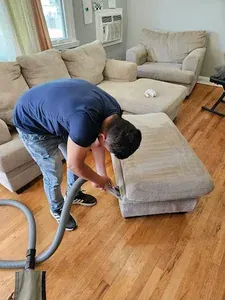
Very few apartments are all leather. Fabric gets hot water extraction; leather gets a gentle surface clean and conditioning. We handle both in the same visit, with a different process for each.
Fabric sofas are $99 per sofa through our couch cleaning in Manhattan. Chairs, ottomans and other pieces are covered by our upholstery cleaning in Manhattan, starting at $99. Dining chairs and loose cushions go through seat cushion cleaning with a free quote, and delicate weaves through our fabric upholstery cleaning.
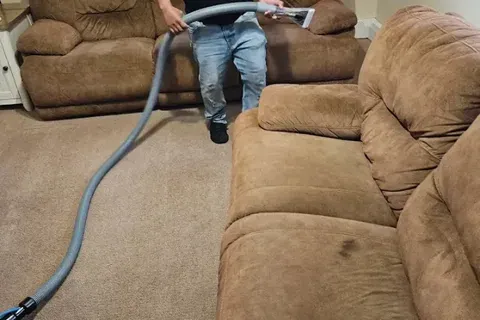
Faux suede and microfiber look a little like nubuck but clean very differently. See our guide to cleaning microfiber couches in NYC apartments.
What a professional leather cleaning visit includes
When our crew arrives, the work goes in this order:
- Check the leather type and test the cleaner on a hidden spot.
- Vacuum the creases and seams.
- Clean the surface with a pH-balanced leather cleaner, working panel by panel.
- Treat body oil on the arms and headrests and other marks one by one.
- Condition the leather to bring back softness.
- Add a protective finish against spills and everyday wear.
Cleaning will not re-dye faded leather or fix cracks that go through the surface. If that is what you have, we say so on the phone or at the start of the visit. See also whether upholstery cleaning extends furniture life.
Booking it in your building
Our crews work in co-ops and doorman buildings across Manhattan every week, and many ask for a certificate of insurance (COI) before we come in. Yesterday, for example, an upholstered headboard job on the Upper West Side needed a COI, while a carpet job the same day uptown did not. Tell us when you book and we send it ahead. More in our post on cleaning in co-op and doorman buildings.
Leather furniture is common in the pre-war co-ops of the Upper East Side and Yorkville, in Gramercy Park apartments, and in the big open lofts of Tribeca, where a sofa may sit in full sun all afternoon. In newer towers in the Financial District, Midtown and Hell’s Kitchen, floor-to-ceiling windows bring the same sun problem. Find your area on our Manhattan service areas page.
What it costs
Leather furniture cleaning starts at $99, and the price is confirmed before we start. A fabric sofa is $99, and carpet is $55 per room if you want the rug or carpet done the same day. New customers get 20% off the first cleaning. If you are getting the apartment ready for guests, our holiday hosting guide helps you plan the order. Questions? See our FAQ page.
Leather sofa or chair drying out this winter? Call us today. Price confirmed before we start.
Frequently asked questions
Can radiator heat really crack a leather sofa?
Yes. Leather keeps its soft feel by holding a little moisture and oil, and hot, dry air pulls both out. A sofa pushed against a radiator, or sitting in full window sun every afternoon, dries out and cracks much faster than one a few feet away.
How often should leather furniture be cleaned and conditioned?
Dust it every week and blot spills right away. A professional clean and conditioning once a year is enough for most homes; twice a year if you have pets, kids, or the sofa sits near the heat or sun.
Can you clean leather and fabric furniture in the same visit?
Yes. We use a gentle surface clean and conditioning on leather and hot water extraction on fabric, all in one visit. Leather cleaning starts at $99, a fabric sofa is $99, and new customers get 20% off the first cleaning.
Will cleaning fix cracked or faded leather?
Cleaning and conditioning soften dry leather and even out its look, but they do not re-dye faded areas or close cracks that go through the surface. For that you need a leather repair specialist. We tell you honestly before we start.