
When your couch gets water damage, immediately blot excess water with towels, lift cushions to improve airflow, and set up fans to dry within 24–48 hours waiting longer causes mold growth. Professional water damage restoration for couches costs $200–$500 in Manhattan but prevents mold, odor, and the $1,500–$3,000 cost of couch replacement from permanent damage.
If your Manhattan couch just got soaked whether from a burst pipe, ceiling leak, window flooding during a storm, or an overturned drink pitcher you’re in a race against time. Water damage to upholstered furniture isn’t just about getting it dry; it’s about preventing mold, bacterial growth, structural damage, and permanent odors that develop within 24–48 hours. Below, we’ll give you the exact step-by-step emergency response, explain what damage happens at each stage, and show you when DIY drying isn’t enough and you need professional intervention.
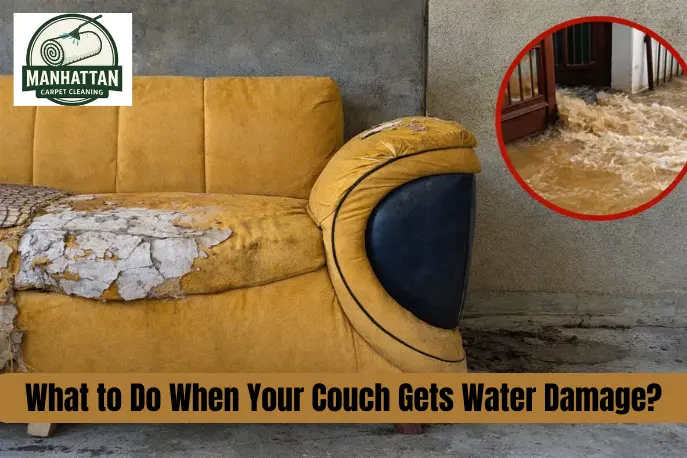
How Fast Water Damage Progresses in Couches
The Critical Timeline
Understanding this timeline is essential it determines whether your couch is salvageable:
0–4 hours (Immediate action window):
- Water is actively soaking into cushions, frame, and padding
- No permanent damage yet
- 95%+ success rate with immediate drying
- This is your best window to save the couch
4–24 hours (Warning zone):
- Water begins penetrating deep into foam padding
- Fabric dyes may start bleeding
- Musty smell begins developing
- 70–85% success rate if aggressive drying starts
24–48 hours (Danger zone):
- Mold spores begin germinating in damp fabric and foam
- Bacterial growth starts producing odor
- Wood frame may start swelling or warping
- 40–60% success rate professional help usually needed
48+ hours (Critical damage):
- Active mold growth visible or smellable
- Permanent musty odor in cushions
- Frame damage likely irreversible
- Fabric may have permanent water stains
- 20–30% salvage rate replacement often necessary
Translation: You have 24 hours to act before damage becomes serious. After 48 hours, you’re likely looking at partial or total loss.
Immediate Emergency Response: First Hour (What to Do RIGHT NOW)
If your couch is currently wet, follow these steps before reading the rest of the article:
Step 1: Stop the Water Source (0–5 minutes)
If water is still flowing:
- Turn off water supply if it’s a pipe burst
- Move couch away from leak if possible (get help wet furniture is heavy)
- Place buckets or towels to catch ongoing drips
- Call building super/management immediately
If it’s from a spill or storm:
- Close windows
- Move any items that are causing continued water exposure
Step 2: Remove Standing Water (5–30 minutes)
What to do:
- Use clean towels to blot and absorb surface water
- Press down firmly and hold for 10–15 seconds
- Flip to dry section of towel and repeat
- Continue until towels come away barely damp
- Use wet/dry vacuum if available (don’t use regular vacuum electrical hazard)
Critical mistakes to avoid:
- ❌ Don’t use heat (hair dryers, space heaters) can set stains and damage fabric
- ❌ Don’t press too hard on delicate fabrics (silk, velvet) can crush pile
- ❌ Don’t wait “to see if it dries on its own” it won’t, and mold will grow
Step 3: Disassemble and Elevate (30–60 minutes)
Remove all cushions:
- Take off seat cushions, back cushions, throw pillows
- Stand them on edge (not flat) to allow air circulation on all sides
- Lean against wall or prop with books/boxes
- Unzip cushion covers if removable
Lift couch off floor:
- Place books, boards, or plastic containers under legs
- Create 2–4 inch gap for airflow underneath
- If frame is wet, this prevents it from sitting in its own moisture
Tilt or flip if severely wet:
- If couch back is soaked, tilt it forward to drain
- For sectionals, separate pieces for better airflow
Step 4: Start Aggressive Drying (Immediately and ongoing)
Set up fans:
- Position 2–4 box fans (or more) blowing directly on couch
- Aim fans at wet areas from multiple angles
- If you don’t own fans, buy or rent them immediately not optional
Open windows (if weather permits):
- Create cross-ventilation
- Not if it’s humid outside (makes drying slower)
- Not if it’s raining (obviously)
Use dehumidifiers:
- Run dehumidifier in same room
- Empties moisture from air, speeding drying
- Essential during humid NYC summers
Turn on AC or heat:
- AC dehumidifies while cooling
- Heat accelerates evaporation (but keep room under 75°F heat sets stains)
Check progress every 2–4 hours:
- Feel cushions should be getting noticeably drier
- If still very damp after 12 hours, you need professional extraction
Different Types of Water Damage = Different Urgency Levels
Not all water damage is equal. Here’s how to assess what you’re dealing with:
| Water Source | Contamination Level | Urgency | DIY Possible? |
|---|---|---|---|
| Clean water (pipe burst, window leak, rain) | Low—no contaminants | High—dry within 24 hours | Yes, if caught early |
| Gray water (washing machine overflow, dishwasher leak) | Moderate—may contain soap, food particles | Very high—dry within 12 hours | Maybe—professional recommended |
| Black water (sewage backup, toilet overflow, flooding) | High—contains bacteria, waste | Extreme—call professionals immediately | NO—health hazard |
| Ceiling leak (unknown source) | Unknown until identified | High—could be sewage from upstairs | Professional assessment needed |
Manhattan-specific issue: Ceiling leaks in apartments often come from neighbor’s bathroom above you. If water is discolored or smells, assume contamination and call professionals you don’t know what’s in that water.
Couch Type Matters: Fabric-Specific Drying Instructions
Fabric/Microfiber Couches (Most Common in Manhattan)
Drying difficulty: Moderate
Time to dry: 12–24 hours with fans
Special considerations:
- Check cleaning code tag (W, S, W-S, or X)
- S-code fabrics may show water spots dry as fast as possible
- Microfiber holds less water than natural fabrics
- Our microfiber couch cleaning can help with post-water-damage restoration
Leather and Faux Leather Couches
Drying difficulty: Easier (leather doesn’t absorb water)
Time to dry: 4–8 hours
Special considerations:
- Wipe dry immediately with soft cloths
- Don’t use heat leather cracks
- Apply leather conditioner after drying to prevent stiffness
- Water can damage foam padding under leather even if surface dries quickly
- Our leather furniture cleaning includes conditioning treatments
Velvet, Silk, or Delicate Fabric Couches
Drying difficulty: Very difficult
Time to dry: 24–48 hours (requires professional handling)
Special considerations:
- Water causes permanent crushing of pile in velvet
- Silk can water-spot irreversibly
- Do NOT attempt DIY drying on expensive delicate fabrics
- Call professionals immediately these materials require specialized restoration
Linen or Cotton Slip-Covered Couches
Drying difficulty: Moderate
Time to dry: 12–24 hours
Special considerations:
- Remove slip covers and wash/dry separately if removable
- Natural fibers take longer to dry than synthetics
- Prone to mildew smell if not dried completely
- May shrink slightly when wet, then relax when dry
Hidden Damage: What’s Happening Inside Your Couch
The fabric you see is just the surface. Water damage affects multiple layers:
Layer 1: Fabric surface
- Visible water stains
- Dye bleeding
- Texture changes
Layer 2: Batting/padding layer
- Holds water like a sponge
- Takes 2–3x longer to dry than fabric
- Mold grows here first
Layer 3: Foam cushions
- High-density foam absorbs significant water
- Can take 48+ hours to dry completely
- Mold grows deep inside where you can’t see it
Layer 4: Wood/metal frame
- Wood swells, warps, and rots when wet
- Metal rusts
- Joints weaken
- Structural damage isn’t visible until later
Layer 5: Springs and support
- Rust and corrosion
- Weakening of support structure
The problem: Even if the surface feels dry after 24 hours, padding and frame may still be saturated. This is why professional moisture meters are critical for determining if drying is complete.
Warning Signs You Need Professional Help
Call Manhattan Carpet Cleaning immediately if:
✗ Couch is still damp after 24 hours of aggressive DIY drying
✗ Water was gray or black (contaminated)
✗ Musty smell develops even after drying
✗ Cushions feel heavy (water trapped in foam)
✗ Visible mold spots appear (black, green, white fuzz)
✗ Fabric shows water stains or rings that won’t dry evenly
✗ Wood frame is wet (will warp and rot without professional drying)
✗ Couch is expensive or antique (don’t risk DIY on valuable furniture)
✗ You don’t have equipment (multiple fans, dehumidifier)
✗ It’s summer in NYC (humidity slows drying dramatically)
Professional Water Damage Restoration: What We Do
At Manhattan Carpet Cleaning, we’ve handled dozens of water-damaged couches across Manhattan. Here’s our process:
Step 1: Assessment and Moisture Mapping
Equipment we use:
- Moisture meters to measure exact water content in fabric, padding, and frame
- Thermal imaging to detect hidden water pockets
- Contamination testing if source is unknown
What we determine:
- Extent of water penetration
- Whether couch is salvageable
- Which restoration methods to use
- Estimated drying time
Step 2: Water Extraction
Professional extraction equipment:
- Truck-mounted extractors with 100x more suction than shop vacs
- Remove up to 95% of water in first pass
- Extract from cushions, padding, even frame cavities
Why this matters: The faster we remove bulk water, the less time mold has to grow. DIY toweling removes maybe 40–60% of water. Our extractors remove 90–95% immediately.
Step 3: Cleaning and Sanitizing
Water damage brings contamination:
- Bacteria from dirty water
- Mold spores that were dormant, now active
- Minerals and sediment from source water
Our treatment:
- Antimicrobial solutions kill mold/bacteria
- pH-balanced cleaning removes contaminants
- Our upholstery cleaning prevents post-water-damage odors
Step 4: Accelerated Drying
Industrial equipment:
- Air movers (not box fans 10x more powerful)
- Commercial dehumidifiers
- Heat mat systems that dry cushions from inside out
- Continuous monitoring with moisture meters
Climate control:
- Temperature maintained at 70–75°F
- Humidity kept below 50%
- Airflow patterns optimized for fastest drying
Results:
- Full couch dry in 24–48 hours (vs. 3–5 days DIY)
- No mold growth
- No musty odor
Step 5: Structural Assessment and Repair
Frame inspection:
- Check for swelling, warping, rot
- Assess joint integrity
- Determine if frame needs reinforcement
Repairs we provide:
- Frame reinforcement or replacement if needed
- Reupholstery if fabric is damaged beyond saving
- Cushion replacement if foam is compromised
Manhattan-Specific Water Damage Scenarios
Ceiling Leaks from Neighbors Above
Common in: High-rise apartments, older buildings
The challenge:
- You don’t control the water source
- May not discover leak until damage is done
- Could be toilet/sewage water (contaminated)
What to do:
- Document everything (photos/video for insurance)
- Notify building management immediately (in writing)
- Call us for assessment we determine contamination level
- File insurance claim (yours or neighbor’s, depending on building policy)
Available in: Upper West Side, Upper East Side, Midtown
Window/AC Unit Flooding During Storms
Common in: Ground-floor and low-rise apartments
The challenge:
- NYC storms can overwhelm old window seals
- AC units leak or allow rain infiltration
- Often happens overnight when you’re not home
Prevention:
- Seal windows properly before storm season
- Maintain AC units
- Use waterproof window barriers during hurricanes
Pipe Bursts in Winter
Common in: Older buildings with aging pipes
The challenge:
- Massive water volume in short time
- Often happens when building heat fails overnight
- Can affect multiple rooms
What to do:
- Shut off water main immediately
- Call emergency plumber
- Begin DIY drying while waiting for professionals
- Call us for furniture restoration
Humidity and Condensation Damage
Common in: Ground-floor apartments, humid summers
The challenge:
- Not a one-time event chronic moisture
- AC condensation, poor ventilation
- Slow mold growth over weeks/months
Solution:
- Address moisture source (dehumidifiers, AC maintenance)
- Our odor removal service treats musty smells from chronic dampness
When to Replace vs. Restore Your Couch
Sometimes restoration isn’t worth it. Here’s how to decide:
Replace if:
- Mold growth is extensive (covering >30% of couch, deep in cushions)
- Black water contamination (sewage) health hazard, cannot be fully sanitized
- Frame is severely damaged (warped, rotted, joints separated)
- Cost of restoration exceeds 50% of replacement cost
- Couch was old or worn before water damage (not worth saving)
- Upholstery is silk, velvet, or delicate fabric with severe water staining
Restore if:
- Clean water damage caught within 24–48 hours
- Couch is expensive ($2,000+ originally) or antique
- Frame is solid and only fabric/cushions affected
- No visible mold or smell caught early
- Professional assessment says 80%+ restoration likely
- Emotional/sentimental value warrants the effort
Not sure? We offer free assessments. We’ll honestly tell you if your couch is worth saving or should be replaced.
Cost Breakdown: DIY vs. Professional Restoration vs. Replacement
DIY Water Damage Drying:
- Equipment rental (fans, dehumidifier): $50–$150
- Time investment: 24–72 hours of monitoring
- Success rate: 40–70% (depends on severity and speed)
- Risk: Incomplete drying leads to mold
- Total cost: $50–$150
Professional Water Damage Restoration:
- Assessment: Usually free or $50–$100
- Extraction and drying: $200–$400
- Cleaning and sanitizing: $150–$300
- Repairs if needed: $100–$500
- Total cost: $200–$800 depending on severity
Couch Replacement:
- Budget couch: $500–$1,500
- Mid-range couch: $1,500–$3,000
- High-end couch: $3,000–$8,000+
- Disposal of old couch: $50–$150
- Total cost: $550–$8,000+
Break-even analysis: If your couch originally cost $2,000+ and damage is caught early, professional restoration at $400–$600 makes financial sense. For cheaper couches with severe damage, replacement may be more economical.
Prevention: Protecting Your Couch from Future Water Damage
Preventive Measures
Physical barriers:
- Waterproof couch covers during storms
- Plastic sheeting if you know there’s a leak
- Move couch away from windows during heavy rain
Building maintenance:
- Report leaks immediately
- Maintain AC units and drainage
- Check window seals annually
- Ensure building pipes are insulated (prevent winter bursts)
Insurance:
- Verify renter’s or homeowner’s insurance covers water damage
- Document your furniture value with photos
- Keep receipts for expensive couches
Fabric protection:
- Professional fabric protector treatment creates water-resistant barrier
- Costs $75–$150 but repels spills and gives you extra reaction time
- Applied after couch cleaning
What to Keep on Hand for Emergencies
Water damage emergency kit:
- 10–20 clean towels
- Wet/dry vacuum
- 2–3 box fans
- Tarp or plastic sheeting
- Waterproof gloves
- Our phone number: +1 347-594-1088
Insurance Claims for Water-Damaged Couches
Documentation You’ll Need
Before damage (keep these now):
- Purchase receipts for furniture
- Photos of furniture when new
- Appraisals for antiques
- Warranty information
After damage (gather immediately):
- Photos/video of wet couch
- Photos of water source
- Photos of water damage to floor, walls
- Written notice to landlord/building (if applicable)
- Professional assessment report
Most Manhattan insurance policies cover:
- Sudden pipe bursts
- Storm damage through windows
- Water damage from fire sprinklers
- Neighbor’s water damage (their insurance usually pays)
Usually NOT covered:
- Flood (requires separate flood insurance)
- Neglect (you saw the leak, didn’t fix it)
- Gradual damage (slow leak over months)
- Maintenance issues (old pipes finally burst)
The Bottom Line
When your couch gets water damage, immediately blot excess water, elevate cushions for airflow, and start fans within the first hour. You have 24–48 hours to dry completely before mold grows. Professional water damage restoration costs $200–$500 in Manhattan but prevents the $1,500–$3,000 cost of couch replacement and eliminates mold health hazards.
The most critical rules:
- Act within the first 4 hours for best results
- Extract as much water as possible immediately
- Set up multiple fans more is better
- Check contamination level (clean vs. gray vs. black water)
- Call professionals if still damp after 24 hours
- Don’t use heat to speed drying
Your couch is soaked right now? Call us immediately.
📞 Call Manhattan Carpet Cleaning at +1 347-594-1088
📍 425 E 29th St, New York, NY 10016
🌐 manhattan-carpetcleaning.net
We offer emergency water damage restoration throughout Manhattan including Chelsea, Greenwich Village, SoHo, Financial District, Harlem, and Tribeca. We also specialize in upholstery cleaning, fabric upholstery cleaning, seat cushion cleaning, and odor removal. Time is critical call us now before mold sets in.
