

Pet Urine Smell in Manhattan Apartments: Why It Keeps Coming Back
You cleaned the spot, the stain is gone, and a week later the smell is back. Here is what is really happening under your carpet, why city apartments make it worse, and what actually stops the odor for good.
Pet stain and odor cleaning
- 20% off your first cleaning
- Pet stain and odor treatment available
- Odor treatment: free quote, price confirmed before we start
- Same-day and next-day appointments
Quick answer: Pet urine smell comes back because the urine is not only on the carpet surface. It soaks through the fibers into the backing, the pad and sometimes the floor underneath. When the air gets humid, or when the spot gets wet again, the old urine wakes up and the smell returns. Surface sprays and shampoos hide it for a while. To stop it, the urine has to be treated where it actually is, then rinsed and extracted out.
If this sounds like your apartment, you are not doing anything wrong. It is one of the most common calls we get, and it is exactly why we offer pet stain removal in Manhattan as its own service and not just as part of a regular cleaning. A pet accident is a different problem from everyday dirt, and it needs a different plan.
Our crews have been cleaning carpets, rugs and furniture in New York City homes since 2005. Below we explain, in plain words, why the smell keeps returning, the home remedies that make it worse, what you can safely do in the first few minutes, and how a professional treatment is different from what you can rent at the hardware store.
Why the smell comes back after you clean
When a dog or cat urinates on carpet, the liquid does not sit on top. Gravity pulls it straight down.
When you clean, you usually only reach the top part of the fibers. The stain you could see is gone, so the job looks finished. But most of the urine is still below, drying slowly in the pad. As it dries, it leaves behind residue that holds the odor.
That residue stays quiet when the air is dry. Then something adds moisture: a humid July week, a mopped floor nearby, a spilled glass of water, or even your own carpet cleaning. The moisture reactivates the old urine, and the smell rises back up through the carpet.
There is a second reason too. Your pet can smell what you cannot. According to Humane World for Animals, as long as a pet can still smell its own scent in a spot, it may keep returning to that same “accident zone.” So a half-cleaned spot does not just smell; it invites the next accident in the same place.
Why Manhattan apartments make pet odor worse
A pet accident in a large suburban house and one in a city apartment are not the same. A few things about living in Manhattan make urine odor harder to escape:
- Small, closed spaces. In a studio or a one-bedroom, the pet’s favorite corner might be six feet from your bed or your couch. There is no far-away room where a smell can fade.
- Humid summers, dry winters. New York summers bring sticky, humid air, which is when old urine spots tend to wake up. In winter, radiator heat dries the air, so the smell may disappear for months and then surprise you in May.
- Old floors in pre-war buildings. Many pre-war apartments have wood subfloors under the carpet. If urine reached the wood, the odor can stay in the floor itself, even after the carpet and pad are cleaned.
- Neighbors below. Repeated accidents in the same spot can soak far down. In a co-op or condo, that is not only your problem; it can become a building problem.
- Walk-ups and long hallways. Dogs that have to wait for the elevator or walk down five flights sometimes cannot hold it, so accidents often happen near the front door.
Tip: Check the smell on a humid or rainy day, not a dry winter one. If the corner smells stronger after rain, the urine is still in the pad, and a surface cleaning will not be enough.
Where the urine actually goes
To understand why some spots need more than a quick cleaning, it helps to picture the layers under your feet. Each layer holds urine differently:
The deeper the urine goes, the more work it takes to remove. Fresh accidents in the fibers are easy. Old, repeated accidents that reached the pad or floor are the ones that keep coming back.
What to do in the first 10 minutes
If you catch an accident while it is still wet, you can prevent most of the long-term smell. Here is a simple routine that works in any apartment. It follows the same basic advice that animal welfare groups give pet owners:
Blot, do not rub
Lay a thick stack of paper towels on the wet spot and stand on it for about a minute. Replace the towels and repeat until the area is only slightly damp. Rubbing pushes urine deeper and spreads it.
Rinse with cool, clean water
Pour a small amount of cool water on the spot and blot it up again. Cool water dilutes what is left. Do not use hot water on fresh urine.
Blot dry again
Keep blotting until you pull up as much moisture as you can. The less liquid you leave, the less reaches the pad.
Skip strong chemicals
Do not reach for ammonia, vinegar, bleach or a heavily scented spray. More on why below.
Mark the spot
Put a small piece of tape near the spot or take a photo. When we come, we will know exactly where to treat, even if it looks clean by then.
Book a proper treatment
If the accident soaked in, or if it is not the first one in that spot, schedule a professional cleaning before the odor settles in.
Home remedies that make pet odor worse
Most people try something from the kitchen or the drugstore first. We understand. But some of the most popular fixes are the reason we see so many spots that keep coming back:
If you already tried some of these, do not worry. Most carpets can still be treated. Just stop adding new products and let a professional see the area.
Store products vs. professional pet treatment
Enzyme sprays from the pet store can help with small, fresh accidents. For older or repeated spots, here is how the two approaches compare:
| Store spray or rental machine | Professional pet stain and odor treatment | |
|---|---|---|
| How deep it reaches | Mostly the top of the fibers | Treatment applied to reach the backing and pad in the affected area |
| Finding hidden spots | Only the spots you can see or smell | We check the room for old spots you may not know about |
| Rinsing | Little or no rinse, so residue stays | Hot water extraction rinses the area and pulls the water back out |
| Drying | Weak suction, carpet stays wet longer | Strong suction, much faster drying |
| Rest of the carpet | Only the spot gets attention | The whole room is cleaned, so the spot does not look different |
| Honest assessment | You guess if it worked | We tell you if the pad or floor may need more than cleaning |
Strong odors sometimes come from more than one source, such as a pet bed, a couch, or cooking smells. In those cases our odor removal service looks at the whole apartment, not only the one spot on the carpet.
How we treat pet urine in carpet
Here is what happens when our technician comes for a pet stain and odor job:
- Inspection. We walk the room with you, ask where the pet usually goes, and look and smell for old spots, especially near corners, doors and furniture legs.
- Dry soil and hair removal. A thorough vacuum pulls out pet hair, dander and street grit so the treatment can reach the fibers.
- Targeted urine treatment first. Urine areas get their own odor treatment before any hot water touches them. The goal is to break down the urine where it sits, not to cover the smell.
- Dwell time. The treatment needs time to work. We do not rush this part, because it is what makes the difference between hiding odor and removing it.
- Hot water extraction. After treatment, we clean the carpet with steam carpet cleaning: hot water rinses the fibers and strong suction pulls the water, residue and loosened urine back out.
- Check and repeat if needed. Heavy spots may get a second treatment while the carpet is still damp.
- Grooming and drying. We brush the pile so the carpet looks even and set up airflow. Keep pets off the area until it is fully dry.
Families with young children or pets that lie on the carpet all day often ask about gentler products. If that is you, read about our organic carpet cleaning option and tell us when you book.
Honest advice: If one corner was used for months, the pad below may be fully soaked, and sometimes the subfloor too. Cleaning can make a big difference, but in severe cases the pad may need to be replaced. We will tell you what we see before we start, and you decide.
Area rugs, couches and mattresses
Pets do not only choose wall-to-wall carpet. Rugs, couches and beds are just as common, and each one needs a slightly different approach.
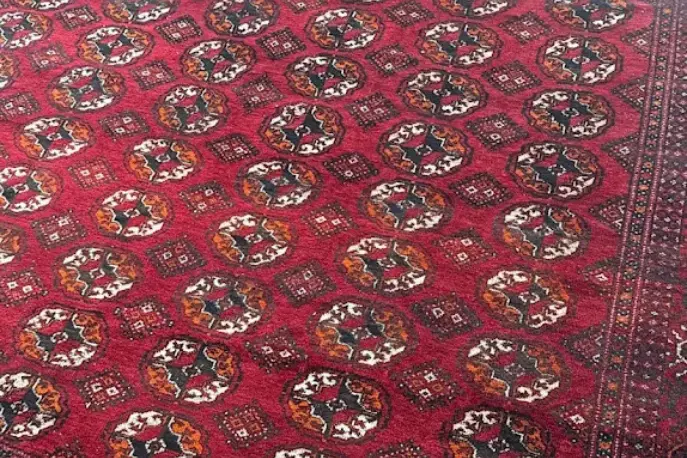
Area rugs. A rug on a wood floor has no pad to soak, but urine passes straight through to the floor underneath. Wool rugs need careful products, because the wrong cleaner can make dyes run. Our area rug cleaning treats the urine and rinses the rug properly. Wool and silk rugs are priced at $4 to $5 per square foot. Rugs that smell bad even after they were cleaned are a separate problem we explain in why does my rug smell after cleaning.
Couches. Cats like the arm of the sofa; dogs like the cushions. Urine in a couch soaks into the foam inside the cushion, where a surface wipe cannot reach. Our couch cleaning is $99 per sofa, and pet odor treatment can be added. Sectionals and armchairs get a free quote, with the price confirmed before we start.
Mattresses. Mattress cleaning is $99, and we treat the urine area before cleaning the whole surface.
How to stop repeat accidents
Removing the odor is half the job. The other half is making sure your pet does not choose the same spot again. These simple habits help in small city apartments:
- Clean the spot fully, so your pet can no longer smell it there.
- Block access to the favorite spot for a few weeks with furniture or a gate.
- Put a food or water bowl near the old spot; many pets avoid going where they eat.
- Keep a regular walk schedule, especially before you leave for work.
- For cats, keep the litter box very clean and in a quiet spot, not next to a noisy radiator or the front door.
- If accidents start suddenly in an adult pet, talk to your veterinarian. Animal welfare groups note there can be a reason a pet picks the wrong place.
Weather plays a role too. Wet boots, slush and summer humidity all affect how carpets behave in the city. We explain more in how NYC weather affects your carpets.
What pet stain and odor cleaning costs
Our prices are simple, and new customers get 20% off their first cleaning. Here is what the most common pet jobs cost:
| What needs cleaning | Price | With 20% off first cleaning |
|---|---|---|
| Carpet, 1 room | $55 per room | $44 |
| Carpet, 2 rooms | $110 | $88 |
| Couch or sofa | $99 per sofa | $79.20 |
| Mattress | $99 | $79.20 |
| Wool or silk rug | $4 to $5 per sq ft | 20% off your first cleaning |
| Heavy pet odor treatment, sectionals, armchairs, other rugs | Free quote | Price confirmed before we start |
We always give you the full price before any work begins, so there are no surprises. If you are moving out soon, our guide on move-out carpet cleaning and your security deposit explains why pet odor is one of the most common carpet deductions.
Pet stain removal across Manhattan
Pet odor is the same problem whether you live in a high-rise or a five-floor walk-up. As carpet cleaners in Manhattan, our crews work in every neighborhood, from doorman buildings to brownstones. A few of the areas we cover:
Do not see your neighborhood? Check the full list on our Manhattan service areas page. Have a question we did not answer here? Our carpet cleaning FAQ covers drying times, preparation and booking.
Smell coming back again? Let us treat it at the source, not just the surface.
Pet urine smell questions
Why does pet urine smell come back after cleaning?
Most of the urine is below the surface, in the carpet backing, the pad or the floor. A surface cleaning removes the visible stain, but when humidity or water reaches the old urine, the smell rises again. The urine has to be treated where it actually is.
Can I use vinegar or ammonia on pet urine?
It is better not to. Animal welfare groups advise avoiding both. Ammonia can smell like urine to your pet and invite repeat accidents, and neither one reaches the urine in the pad.
Is steam cleaning bad for pet urine?
Heat on untreated urine can set the stain and odor. That is why we treat urine areas first and only then clean with hot water extraction, which rinses the area and pulls the water back out.
Can the smell be removed if the urine reached the pad?
Often a lot of it can, with targeted treatment and extraction. If one spot was used for a long time, the pad or even the subfloor may be saturated. We tell you honestly what we see before we start.
How long until my pet can walk on the carpet again?
Keep pets off the area until it is fully dry. Most rooms dry in a few hours with good airflow, and in winter radiator heat helps.
How much does pet stain and odor cleaning cost in Manhattan?
Carpet cleaning is $55 per room, couches are $99 per sofa and mattresses are $99, with 20% off your first cleaning. Heavy odor treatment gets a free quote, and the price is confirmed before we start.
Get a free pet odor quote
Book online in a minute, or call and tell us your address, what needs cleaning and where the accidents happen. We will give you a price and the first available time.
Prefer to talk? Call (347) 594-1088.
Get rid of pet urine smell for good
$55 per room · 20% off your first cleaning · Same-day service across Manhattan
