
Microfiber couches should be cleaned with rubbing alcohol (for W or S-W codes) or vacuumed with upholstery attachment and spot-cleaned with mild soap (for W codes only). Professional microfiber couch cleaning costs $150–$400 in Manhattan and removes deep stains, body oils, and odors that DIY methods can’t reach extending your couch’s life by 5+ years.
If your microfiber couch in your Manhattan apartment is looking dingy, showing dark spots from body oils, or has mystery stains you can’t identify you’re dealing with one of the most common furniture problems in NYC. Microfiber is popular in small apartments because it’s durable and stain-resistant, but it still needs regular cleaning. Below, we’ll give you the exact step-by-step process for cleaning microfiber couches safely, explain why certain methods work while others ruin the fabric, and show you when DIY isn’t enough and you need professional help.
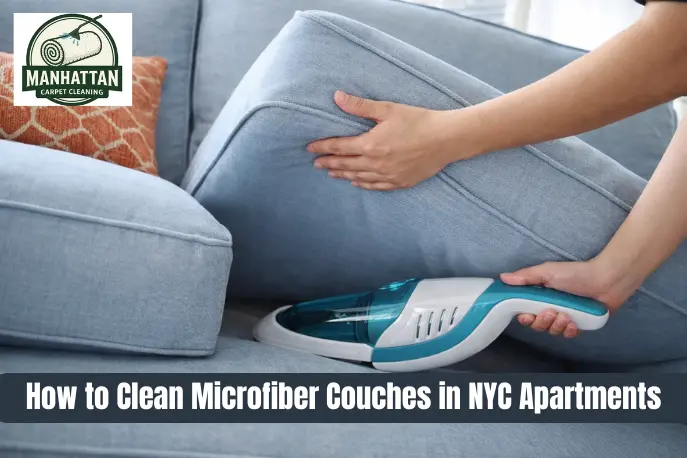
Why Microfiber Couches Get So Dirty in NYC Apartments
The Urban Living Problem
Manhattan apartments face unique challenges that accelerate couch soiling:
Street pollution and dust:
- Construction debris filters through windows
- Vehicle exhaust particles settle on furniture
- Street dust tracked in on shoes and clothes
- Pollen from parks and trees in spring/summer
Small space = constant use:
- Your couch is your living room, dining room, office, and guest bed
- More hours of contact = more body oils, sweat, and dirt
- Limited furniture means each piece works harder
Pet-friendly buildings:
- NYC has one of the highest pet ownership rates in the US
- Pet dander, oils, and tracked-in dirt accumulate in fabric
- Hair embeds in microfiber’s tight weave
Humidity and weather:
- Summer humidity (70–90%) traps odors in fabric
- Winter heating dries out microfiber and makes it attract more dust
- Constant temperature changes affect fabric condition
What Microfiber Actually Is (And Why It’s Tricky to Clean)
Microfiber is ultra-fine synthetic fiber (polyester and polyamide/nylon blend) that’s:
- Extremely tightly woven (traps dirt deep in fibers)
- Naturally water-resistant (liquid beads up initially)
- Prone to water spots if cleaned incorrectly
- Sensitive to heat (can melt or distort)
- Static-prone (attracts dust and pet hair)
The catch: The same tight weave that makes microfiber durable also makes it hold onto dirt, oils, and stains once they penetrate the surface.
CRITICAL FIRST STEP: Check Your Cleaning Code
Before you touch your microfiber couch with any cleaning solution, find the cleaning code tag (usually under cushions or on the bottom of the couch):
| Code | What It Means | Safe Cleaning Method | Never Use |
|---|---|---|---|
| W | Water-based cleaners only | Mild soap + water, steam cleaning | Solvents, alcohol, dry cleaning fluids |
| S | Solvent-based cleaners only | Rubbing alcohol, dry cleaning solvent | Water, water-based cleaners, steam |
| W-S or S-W | Either water or solvent | Your choice alcohol usually works best | Bleach, harsh chemicals |
| X | Vacuum only, no liquids | Vacuum with upholstery attachment | Any liquid cleaner |
Can’t find the tag? Assume it’s S-code (solvent-only) to be safe. Water on S-code microfiber causes permanent water rings.
Missing this step is the #1 way people ruin their microfiber couches. We’ve seen $2,000+ couches destroyed by using water on S-code fabric.
DIY Microfiber Couch Cleaning: Complete Step-by-Step Guide
Tools You’ll Need
Basic cleaning kit:
- Vacuum with upholstery brush attachment
- White microfiber cloths (12–20 of them)
- Spray bottles (2–3)
- Soft-bristle brush or sponge
- Rubbing alcohol (91% isopropyl) for S or S-W code
- Mild dish soap (clear, no dyes) for W code
- Distilled water (NYC tap water has minerals that spot)
- Fans or hair dryer (cool setting only)
Cost: $30–$50 if you don’t have these items
Method 1: For S-Code or S-W Code Microfiber (Alcohol Method)
Why alcohol works: Rubbing alcohol dissolves body oils and stains without leaving water marks. It evaporates quickly, preventing water spots.
Step 1: Vacuum thoroughly (10–15 minutes)
- Remove all cushions
- Vacuum every surface with upholstery attachment
- Get into crevices where crumbs and debris hide
- Vacuum under cushions on the frame
- Use vacuum hose to reach tight corners
Step 2: Prep your workspace
- Open windows for ventilation (alcohol fumes are strong)
- Set up fans to help drying
- Protect surrounding area with towels (in case of overspray)
Step 3: Apply rubbing alcohol
- Fill spray bottle with 91% rubbing alcohol (don’t dilute)
- Spray one small section at a time (2×2 feet)
- Don’t oversaturate light misting is enough
- Work in sections so you don’t lose track
Step 4: Scrub gently
- Use white cloth or soft-bristle brush
- Scrub in circular motions
- You’ll see dirt transferring to cloth
- Flip to clean section of cloth frequently
- Never use colored cloths (dye can transfer)
Step 5: Fluff the fibers
- While section is still slightly damp, brush fibers with soft brush
- This prevents matting and restores texture
- Always brush in same direction
- Essential step skip it and couch looks flat and worn
Step 6: Let dry and repeat if needed
- Alcohol evaporates in 15–30 minutes
- Use fans to speed drying
- If stains remain, repeat process
- Some stubborn stains need 2–3 passes
Step 7: Final fluffing
- Once completely dry, brush entire couch to restore uniform texture
- Vacuum one more time to remove any loosened dirt
Time investment: 2–4 hours for average couch
Success rate: 70–85% for light to moderate soiling
Cost: $15–$25 for supplies
Method 2: For W-Code Microfiber (Water-Based Method)
Step 1: Vacuum thoroughly (same as Method 1)
Step 2: Mix cleaning solution
- 1/4 teaspoon clear dish soap (Dawn or similar)
- 2 cups distilled water (not tap water)
- Mix gently—you want solution, not bubbles
Step 3: Test in hidden area
- Apply small amount to inconspicuous spot
- Let dry completely
- Check for water rings or discoloration
- If you see water marks, STOP use alcohol method instead
Step 4: Apply solution sparingly
- Dampen (don’t soak) white cloth with solution
- Blot and gently scrub stained areas
- Work from outside edges toward center
- Use very little liquid microfiber shouldn’t be wet
Step 5: Rinse
- Dampen clean cloth with distilled water only
- Blot to remove soap residue
- Soap left behind attracts dirt rapidly
- Multiple passes may be needed
Step 6: Blot dry
- Use dry towels to absorb moisture
- Press firmly and hold for 10 seconds
- Continue until no moisture transfers to towel
Step 7: Speed dry with fans
- Set up multiple fans blowing on couch
- Don’t use heat (damages microfiber)
- Must dry within 4–6 hours to prevent water spots
Step 8: Brush to restore texture (same as Method 1)
Time investment: 3–5 hours for average couch
Success rate: 60–75% (water-based cleaning is trickier)
Cost: $10–$20 for supplies
Method 3: For X-Code Microfiber (Vacuum Only)
If your couch is X-code, you’re limited to:
- Regular vacuuming (2–3 times per week)
- Immediate dry brushing of spills before they set
- Professional dry cleaning for deep stains
Don’t attempt liquid cleaning on X-code microfiber you’ll void warranties and likely cause permanent damage.
Common Microfiber Couch Problems and Solutions
Problem 1: Dark Spots from Body Oils (Especially on Armrests and Headrest)
What causes it: Skin oils, hair products, and sweat accumulate in areas where bodies make constant contact. In NYC apartments where couches get heavy daily use, these dark spots appear within 6–12 months.
DIY solution:
- Alcohol method works best (even for W-code, spot-test first)
- May require 2–3 cleaning passes
- Some spots are permanent if oils have oxidized (turned black)
Professional solution: Our microfiber couch cleaning uses hot water extraction that dissolves oils at the molecular level removes stains DIY can’t touch.
Problem 2: Water Rings or Stains
What causes it: Someone used water on S-code microfiber, or left wet spot too long, or used NYC tap water with minerals.
DIY fix (sometimes works):
- Lightly spray entire affected cushion with rubbing alcohol
- This “resets” the water marks by evening out the moisture
- Brush while damp to restore texture
- Success rate: 40–60%
Professional solution: We can often remove water rings with specialized solvents and controlled moisture application. Not always possible if damage is severe.
Problem 3: Matted, Flat Appearance
What causes it:
- Not brushing after cleaning
- Too much pressure while scrubbing
- Heat exposure (sitting too close to radiator)
- Age and wear (microfiber eventually flattens)
DIY fix:
- Vacuum with upholstery brush to lift fibers
- Use soft-bristle brush in circular motions
- Steam (from distance) then brush while warm
- Success rate: 50–70% depending on damage severity
Professional solution: Our fabric upholstery cleaning includes professional grooming that restores pile better than DIY.
Problem 4: Smell (Body Odor, Pet Odor, Musty)
What causes it:
- Oils and sweat trapped deep in fibers
- Pet dander and accidents
- NYC humidity trapping odors
- Spills that weren’t fully cleaned
DIY fix:
- Sprinkle baking soda over entire couch
- Let sit overnight
- Vacuum thoroughly
- Helps temporarily but doesn’t remove source
Professional solution: Our odor removal service treats odor at the source with enzyme treatments and sanitizing solutions. Surface treatments only mask smells we eliminate them.
Problem 5: Pet Hair Embedded in Fabric
What causes it: Microfiber’s static charge attracts pet hair like a magnet. The tight weave traps it deep.
DIY fix:
- Vacuum with rubber-edged upholstery tool
- Use rubber gloves rub in circular motions (static pulls hair)
- Lint roller for surface hair
- Spray light mist of water, then vacuum (water weighs down hair)
Time-saver: Vacuum 2–3 times per week to prevent buildup. Once embedded deeply, hair is extremely difficult to remove completely.
What NEVER to Do to Microfiber Couches
| Never Do This | Why It Ruins Your Couch | What Happens |
|---|---|---|
| Use hot water or steam on S-code | Water causes permanent rings on solvent-only fabric | Irreversible water staining |
| Apply bleach or harsh chemicals | Bleach discolors and weakens microfiber | Color fading, fabric deterioration |
| Scrub aggressively | Damages delicate fibers and ruins texture | Bald spots, matted appearance |
| Over-wet the fabric | Too much liquid seeps into cushion foam | Mold growth, permanent odor, water spots |
| Use colored cleaning cloths | Dye transfers to wet microfiber | New stains on top of old ones |
| Dry with high heat | Melts synthetic microfiber | Shiny, hard spots that can’t be fixed |
| Skip the brushing step | Fibers dry matted and flat | Permanent flat, worn appearance |
| Use carpet cleaning machines | Too much water, wrong chemicals | Over-wetting, water spots, possible fabric damage |
When DIY Isn’t Enough: Signs You Need Professional Cleaning
Call Manhattan Carpet Cleaning if:
✗ Set-in stains that didn’t respond to alcohol or soap (wine, coffee, ink, food)
✗ Strong odors that return after cleaning (pet urine, body odor, smoke)
✗ Water rings you can’t remove with DIY methods
✗ Entire couch is dingy despite your cleaning efforts
✗ Unknown fabric code or you’re afraid to experiment
✗ Couch is expensive and you don’t want to risk damage
✗ You don’t have time for 3–4 hour DIY project
✗ Previous DIY attempts failed or made it worse
Professional Microfiber Couch Cleaning: What We Do Differently
Our 5-Step Deep Cleaning Process
Step 1: Fabric identification and testing
- Verify cleaning code
- Test for colorfastness
- Identify fiber blend
- Check for existing damage
Step 2: Pre-treatment
- Apply specialized pre-treatment solutions for oils and stains
- Let dwell 10–15 minutes to break down soil
- Spot-treat problem areas with targeted solutions
Step 3: Deep extraction cleaning
- For W-code: Hot water extraction (like steam carpet cleaning but for upholstery)
- For S-code: Dry solvent cleaning with specialized equipment
- Removes dirt from deep in cushions, not just surface
Step 4: Neutralizing and sanitizing
- pH-balancing rinse removes all cleaning residue
- Sanitizing treatment kills bacteria, dust mites, allergens
- Odor removal treatment if needed
Step 5: Speed drying and grooming
- Industrial air movers dry couch in 2–4 hours
- Professional grooming restores pile and texture
- Final inspection ensures quality
Equipment Advantage
| DIY Method | Professional Equipment (Manhattan Carpet Cleaning) |
|---|---|
| Spray bottles, cloths | Industrial hot water extraction or dry cleaning systems |
| 91% rubbing alcohol | Professional-grade solvents and solutions |
| Regular vacuum | High-powered upholstery vacuum |
| Box fans | Industrial air movers (dry 3–4x faster) |
| Soft brush | Professional grooming tools |
| Guesswork | 10+ years experience with microfiber |
Manhattan-Specific Microfiber Challenges
Small Apartments = Limited Drying Space
The problem:
- Can’t open all windows for cross-ventilation
- Limited space for fans
- Can’t remove cushions to dry separately (nowhere to put them)
- Humid NYC summers slow drying dramatically
Our solution: We either clean on-site with industrial air movers, or offer pickup/delivery where couches are cleaned and dried in our climate-controlled facility.
Multi-Story Buildings = Access Challenges
The problem:
- Can’t easily take couch outside to dry in sun
- Elevators restrict large furniture movement
- Building rules about cleaning during business hours
Our solution: We work around building schedules and have experience with NYC building access (freight elevators, service entrances, etc.). Available in Upper West Side, Chelsea, Financial District, and all Manhattan neighborhoods.
Pet-Friendly High-Rises
The problem:
- Pet dander circulates through shared HVAC systems
- Multiple pets in building = more allergens
- Small apartments mean pets spend more time on furniture
Our solution: Specialized pet stain removal that treats urine in cushion foam, not just surface, plus allergen-reducing sanitizing treatments.
Microfiber Couch Cleaning Schedule
| Usage Level | DIY Spot Cleaning | DIY Deep Cleaning | Professional Cleaning |
|---|---|---|---|
| Light use (1–2 people, no pets) | As needed | Every 12–18 months | Every 2–3 years |
| Moderate use (2–3 people, no pets) | Monthly | Every 9–12 months | Every 18–24 months |
| Heavy use (family, kids) | Weekly | Every 6–9 months | Every 12–18 months |
| Pets | Weekly | Every 4–6 months | Every 8–12 months |
| Allergies/asthma in household | Weekly | Every 6 months | Every 12 months |
Additional maintenance:
- Vacuum with upholstery attachment 2–3 times per week
- Rotate cushions monthly to distribute wear
- Brush with soft-bristle brush weekly to maintain texture
Cost Comparison: DIY vs. Professional
DIY Microfiber Couch Cleaning:
- Supplies (alcohol, cloths, brushes): $20–$50
- Time investment: 3–5 hours
- Success rate: 65–80% for light soiling
- Risk of damage: Moderate (if wrong code used)
- Results last: 3–6 months
Professional Microfiber Couch Cleaning:
- Standard couch (sofa): $150–$250
- Sectional: $250–$400
- Love seat: $100–$150
- Time investment: Drop-off/schedule only
- Success rate: 90–95% for most stains
- Risk of damage: Minimal (fully insured)
- Results last: 12–18 months
The value proposition: Professional cleaning costs $150–$400 but extends your couch’s life by 5+ years. If your couch cost $1,500–$3,000, spending $200 every 18 months to preserve it is a smart investment.
Protecting Your Clean Microfiber Couch
Fabric Protection Treatment
After cleaning (DIY or professional), consider protective coating:
- Creates invisible barrier on fibers
- Repels liquids and stains
- Makes future cleaning easier
- Lasts 12–18 months
- Costs $75–$150 professionally applied
Daily Protection Habits
Prevent soiling:
- Use throws or blankets on high-contact areas
- No shoes on furniture rule
- Keep pets off couch (or designate one section as “pet zone”)
- Wash hands before lounging (removes body oils)
Immediate spill response:
- Blot immediately with white cloth
- Don’t rub or scrub
- Use appropriate cleaner for your code
- Speed is everything—stains set within minutes
Microfiber vs. Other Upholstery: Special Considerations
Microfiber vs. Leather:
- Microfiber traps dirt internally; leather wipes clean easily
- Microfiber needs specific codes; leather is more forgiving
- Our leather furniture cleaning is completely different process
Microfiber vs. Traditional Fabric:
- Microfiber is more stain-resistant initially
- But harder to deep clean once soiled
- Traditional fabric upholstery cleaning is often easier
Why microfiber is popular in NYC:
- Durable for daily use
- Initially stain-resistant
- Affordable
- Comes in modern styles
- Good for small spaces
The Bottom Line
Microfiber couches should be cleaned with rubbing alcohol for S-code fabric or mild soap solution for W-code fabric always check the cleaning code first. DIY cleaning works for light maintenance but professional microfiber couch cleaning costs $150–$400 in Manhattan and removes deep oils, stains, and odors that surface cleaning can’t reach.
The most important rules:
- Check cleaning code BEFORE using any liquid
- Use white cloths only (colored dyes transfer)
- Don’t over-wet (causes water spots and mold)
- Always brush while damp to restore texture
- When in doubt, call professionals before experimenting
Ready to restore your microfiber couch?
📞 Call Manhattan Carpet Cleaning at +1 347-594-1088
📍 425 E 29th St, New York, NY 10016
🌐 manhattan-carpetcleaning.net
We serve all Manhattan neighborhoods including Upper East Side, SoHo, Greenwich Village, Harlem, and Tribeca. We also specialize in couch cleaning, upholstery cleaning, seat cushion cleaning, and microfiber upholstery cleaning. Don’t risk ruining your couch with the wrong cleaning method call us today for expert care.
