
Oriental rugs require specialized cleaning with pH-balanced solutions, controlled water temperature (never exceeding 110°F), and proper drying techniques to prevent color bleeding, shrinkage, and fiber damage. Professional Oriental rug cleaning in Manhattan costs $3–$8 per square foot but protects rugs worth $5,000–$50,000+ from irreversible damage caused by DIY methods.
If you own an Oriental rug in Manhattan whether it’s a family heirloom, a recent investment piece, or something you picked up at an estate sale you already know these aren’t ordinary floor coverings. They’re hand-knotted works of art that can last 100+ years with proper care, or get completely ruined in a single afternoon with the wrong cleaning method. Below, we’ll give you the exact do’s and don’ts for cleaning Oriental rugs, explain why these rugs are so delicate, and show you when DIY maintenance is safe versus when you absolutely need professional help.
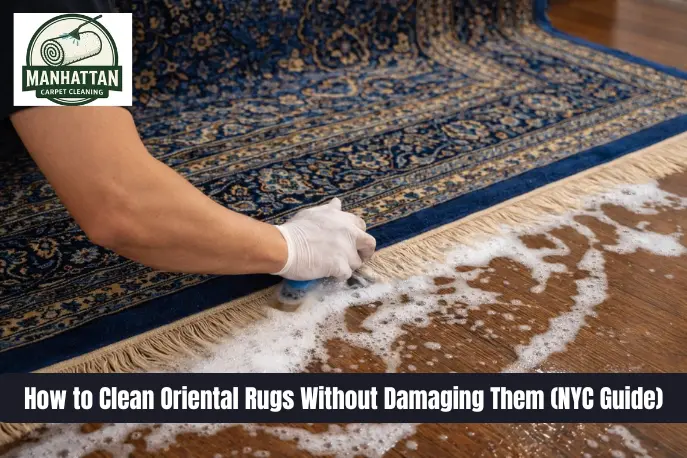
Why Oriental Rugs Are Different (And Why Standard Carpet Cleaning Destroys Them)
What Makes Oriental Rugs Unique
Construction:
- Hand-knotted by artisans (can take 6–18 months to create a single rug)
- Natural fibers: wool, silk, cotton foundation
- Natural dyes from plants, insects, minerals
- Knot density: 100–1,000+ knots per square inch
Why this matters for cleaning: Every aspect of an Oriental rug’s construction makes it vulnerable to damage from standard cleaning methods. The natural dyes can bleed or fade, the hand-knotted structure can distort, and the delicate fibers can shrink or felt if treated improperly.
The 5 Ways DIY Cleaning Destroys Oriental Rugs
1. Color Bleeding and Dye Run Natural dyes aren’t colorfast like synthetic carpet dyes. Using too much water, hot water, or wrong pH cleaners causes colors to bleed into adjacent areas ruining the rug’s pattern permanently.
Damage cost: A $10,000 Persian rug with dye bleeding becomes worth $2,000–$3,000 (or less) overnight.
2. Shrinkage and Distortion Oriental rugs are made on looms under tension. Water causes the wool foundation to relax and shrink sometimes by 10–15%. Once a rug shrinks, it cannot be restored to original size.
What causes it: Hot water, over-wetting, machine washing, or improper drying.
3. Fiber Felting Wool fibers have scales that, when agitated with water and heat, lock together (felting). This creates a stiff, matted texture that destroys the rug’s softness and drape.
What causes it: Aggressive scrubbing, steam cleaners, carpet cleaning machines, or hot water extraction.
4. Rotting of Foundation Oriental rugs have cotton or wool foundations. Prolonged moisture (from over-wetting or slow drying) causes rot, mildew, and structural breakdown.
Manhattan’s risk factor: NYC humidity makes this worse. A rug that takes 48+ hours to dry is already growing mold.
5. Color Fading Harsh chemicals, bleach-based cleaners, or prolonged sun exposure during drying fade natural dyes irreversibly.
What You Can Safely Do at Home (Regular Maintenance)
Weekly Maintenance: Gentle Vacuuming
Safe vacuuming technique:
- Use a canister vacuum (NOT an upright with beater bar)
- Vacuum in direction of the pile only (run your hand over the rug—pile lies one direction)
- Make gentle passes no aggressive back-and-forth scrubbing
- Vacuum the back side once per month (removes deep dust)
- Never vacuum fringe (use a soft brush to gently clean it)
Why this works: Removes surface dust and dirt before it embeds in fibers, preventing abrasive damage.
Frequency:
- High-traffic Oriental rugs: 2–3 times per week
- Low-traffic or decorative rugs: Once per week
- Never skip more than 10–14 days between vacuuming
Monthly Maintenance: Spot Inspection and Rotation
Inspect for:
- Early signs of moth damage (small holes, loose fibers)
- Color fading from sunlight exposure
- Wear patterns in high-traffic areas
- Pet accidents or spills you might have missed
Rotate your rug: Flip 180 degrees every 3–6 months to distribute wear and sun exposure evenly. This prevents one end from fading or wearing faster than the other.
Immediate Spill Treatment (The Right Way)
If something spills on your Oriental rug, act within minutes—not hours:
Step 1: Blot immediately
- Use clean white towels or paper towels
- Blot from outside edge toward center (prevents spreading)
- Never rub or scrub (damages fibers and spreads stain)
Step 2: Apply plain water only
- Dampen (don’t soak) a clean white cloth with cool water
- Blot the stain gently
- Continue blotting with dry towels to absorb moisture
Step 3: Air dry completely
- Lift rug off floor if possible (place towels underneath for airflow)
- Use fans to speed drying
- Never use heat (hair dryers, heaters) which can set stains
Step 4: Call professionals if:
- Stain doesn’t lift after blotting with water
- Spill is red wine, coffee, pet urine, or anything with strong color
- Liquid has soaked through to backing
- Rug shows any color bleeding
For stubborn stains, our stain removal service uses pH-balanced solutions specifically formulated for natural fibers and dyes.
What You Should NEVER Do to an Oriental Rug
| Never Do This | Why It Destroys Your Rug | Safe Alternative |
|---|---|---|
| Use carpet cleaning machines (Rug Doctor, etc.) | Too much water, wrong pH, aggressive agitation causes shrinkage and felting | Professional Oriental rug cleaning |
| Steam clean or use hot water | Heat causes dye bleeding, shrinkage, and felting | Cool/lukewarm water (max 110°F) by professionals |
| Use grocery store carpet cleaners | Contain bleach, harsh chemicals, wrong pH for natural dyes | pH-neutral cleaners designed for wool/silk |
| Scrub with brushes | Damages hand-knotted structure and causes fiber abrasion | Gentle blotting only |
| Hang to dry while soaking wet | Weight of water distorts shape and stretches foundation | Flat drying with airflow on both sides |
| Leave in direct sunlight to dry | Fades natural dyes permanently | Dry in shade with fans and dehumidifiers |
| Treat pet urine with enzyme cleaners | Many enzymes bleach natural dyes | Professional pet stain removal with rug-safe formulas |
| Machine wash (even “gentle” cycle) | Causes severe shrinkage, distortion, color bleeding | Hand washing by certified rug specialists only |
When to Call Professional Oriental Rug Cleaners
Annual or Bi-Annual Deep Cleaning
Even with perfect maintenance, Oriental rugs need professional cleaning:
Frequency guide:
| Rug Location/Use | Professional Cleaning Frequency | Why |
|---|---|---|
| High-traffic areas (entryway, living room) | Every 12–18 months | Removes embedded dirt that causes fiber abrasion |
| Medium traffic (bedroom, dining room) | Every 2–3 years | Prevents soil buildup and maintains appearance |
| Low traffic (decorative, wall hangings) | Every 3–5 years | Removes dust and prevents moth damage |
| Homes with pets | Every 12 months | Removes dander, oils, and treats accidents properly |
| Antique or high-value rugs ($10,000+) | Every 18–24 months | Preserves investment and prevents deterioration |
Emergency Situations Requiring Immediate Professional Help
Call Manhattan Carpet Cleaning immediately for:
Pet urine accidents: Urine soaks through to backing and crystallizes. Within 24–48 hours, it causes permanent dye bleeding and odor that never leaves without professional treatment.
Flooding or water damage: Any standing water on an Oriental rug requires immediate extraction and controlled drying to prevent rot, mold, and dye bleeding.
Wine, coffee, or colored beverage spills: Natural dyes are especially vulnerable to acidic liquids. These set within hours.
Visible moth damage: Small holes indicate active infestation. Professional cleaning kills eggs and larvae before they destroy more of the rug.
Smoke or fire damage: Soot and smoke odor penetrate deeply and require specialized cleaning to remove without damaging fibers.
Unknown stains or discoloration: If you don’t know what caused a stain, don’t experiment with home remedies. You could make it permanent.
The Professional Oriental Rug Cleaning Process (What We Do)
At Manhattan Carpet Cleaning, we follow a meticulous process designed specifically for hand-knotted Oriental rugs:
Step 1: Pre-Inspection and Fiber Testing
What we check:
- Fiber content (wool, silk, cotton mix)
- Dye stability (we test in an inconspicuous area)
- Pre-existing damage (moth holes, weak areas, previous repairs)
- Foundation condition (dry rot, weak spots)
- Age and origin (affects cleaning method)
Why this matters: A 1920s Persian rug needs different treatment than a 2020 Turkish rug. We adjust our approach based on the specific rug’s needs.
Step 2: Dry Soil Removal
Process:
- Gentle dusting using specialized equipment
- Removes up to 85% of dry soil before any water touches the rug
- Compressed air through backing to dislodge embedded dust
Why we do this: Dry soil turns into mud when wet, making it harder to remove and potentially staining the rug.
Step 3: Submersion Washing (The Traditional Method)
Process:
- Rug is fully submerged in a controlled bath
- Cool water (maximum 110°F) with pH-balanced, rug-safe detergent
- Gentle agitation by hand (never machines)
- Multiple rinse cycles until water runs completely clear
Why submersion works: Unlike topical cleaning, submersion flushes soil completely from the foundation and fibers the same method used in the Middle East for centuries.
Step 4: Controlled Drying
Process:
- Excess water extracted gently (no high-pressure extraction)
- Rug laid flat on specialized drying racks with airflow on both sides
- Climate-controlled environment (prevents mildew)
- Drying time: 24–48 hours depending on thickness
Why controlled drying matters: Fast drying prevents mold. Flat drying prevents distortion. Climate control prevents color bleeding.
Step 5: Post-Cleaning Inspection and Grooming
Final steps:
- Fibers are groomed in direction of pile
- Fringe is cleaned and straightened
- Any discovered damage is documented and repair options discussed
- Final quality check ensures no color bleeding or issues
DIY vs. Professional: Cost Comparison
DIY Approach (NOT recommended but here are the real costs):
- Rental carpet cleaner: $40–$60/day
- Cleaning solution: $20–$40
- Ruined Oriental rug: $5,000–$50,000+
Professional Oriental Rug Cleaning:
- Small rug (3×5 ft / 15 sq ft): $45–$120
- Medium rug (5×8 ft / 40 sq ft): $120–$320
- Large rug (8×10 ft / 80 sq ft): $240–$640
- Extra-large or antique rugs: $640+
Pricing factors:
- Fiber type (silk costs more than wool)
- Condition (heavily soiled rugs need extra treatment)
- Age and fragility (antique rugs require more care)
- Fringe repair or treatment (additional $50–$150)
Pick-up and delivery: Available throughout Manhattan, including Upper East Side, Upper West Side, Tribeca, and Greenwich Village.
Oriental vs. Persian vs. Turkish: Do They Clean Differently?
All are hand-knotted rugs, but there are subtle differences:
Persian Rugs:
- Typically wool pile on cotton foundation
- Natural dyes (some very fugitive/prone to bleeding)
- Requires dye stability testing before cleaning
- Our Persian rug cleaning service includes extensive testing
Turkish Rugs:
- Often double-knotted (more durable)
- May use silk highlights
- Generally more colorfast than Persian
- Cleaning process similar but can handle slightly more water
Chinese/Tibetan Rugs:
- Higher pile height
- Often wool with silk accents
- Requires careful attention to pile direction during cleaning
Antique Rugs (pre-1900):
- Extremely fragile natural dyes
- May have structural weaknesses
- Requires gentlest cleaning methods
- Our antique rug cleaning specialists assess before proceeding
Special Considerations for Silk Oriental Rugs
Silk rugs are the most delicate and expensive Oriental rugs and the easiest to destroy:
Why silk is different:
- Silk fibers are extremely delicate
- Water causes immediate color bleeding if not handled properly
- Pile direction matters even more (brushing against grain damages fibers)
- Cannot withstand heat or aggressive cleaning
Cleaning requirements:
- Hand washing only, never machine or steam
- Cool water (max 90°F for silk)
- Specialized silk-safe detergents
- Extended drying time (silk holds moisture)
- Must be dried completely flat to prevent distortion
Cost: Silk rug cleaning runs $5–$12 per square foot due to intensive labor and risk involved.
Our advice: Never attempt DIY cleaning on silk rugs. The margin for error is zero.
Protecting Your Oriental Rug Between Cleanings
Rug Pads (Essential, Not Optional)
A quality rug pad:
- Prevents slipping (safety)
- Reduces wear by cushioning fibers
- Allows airflow underneath (prevents mold in humid NYC climate)
- Keeps rug flat and prevents curling edges
What to buy:
- Natural rubber or felt pads (never vinyl which traps moisture)
- Cut 1–2 inches smaller than rug dimensions
- Replace every 5–7 years
Cost: $50–$200 depending on size
Value: Extends rug life by 50–100%
Sun Protection
NYC apartments often have floor-to-ceiling windows beautiful for natural light, terrible for Oriental rugs:
UV damage:
- Fades natural dyes permanently
- Deteriorates fibers over time
- Causes uneven fading (one side exposed more than other)
Solutions:
- UV-blocking window film or curtains
- Rotate rug every 3–6 months
- Keep valuable rugs away from direct sunlight
- Use area rugs in sun-exposed areas instead of priceless Orientals
Moth Prevention
Wool Oriental rugs are candy for clothes moths, especially in NYC where moth infestations are common:
Prevention:
- Vacuum regularly (moths lay eggs in undisturbed wool)
- Store unused rugs in breathable bags with cedar or lavender
- Never store rugs in plastic (traps moisture, encourages mold)
- Inspect quarterly for signs of damage (small holes, loose fibers)
If you spot moths: Professional cleaning kills eggs and larvae. Home treatments often miss them.
Manhattan-Specific Oriental Rug Challenges
Humidity and Mold Risk
NYC summer humidity (70–90%) creates perfect conditions for mold in rug foundations:
Prevention:
- Use dehumidifiers during humid months
- Ensure airflow under rug (proper rug pad)
- Never place Oriental rugs in basements or ground-floor apartments prone to dampness
- If rug gets wet, call us immediately for proper drying
Street Salt and Winter Damage
Manhattan winters mean salt, slush, and chemicals tracked onto rugs:
Protection:
- Never place Oriental rugs in entryways during winter
- Use machine-washable runners instead
- If salt touches rug, blot immediately with water (salt is corrosive)
- Schedule professional cleaning after winter to remove salt residue
Small Apartment Storage Issues
Manhattan apartments lack storage space. If you need to store an Oriental rug:
Proper storage:
- Clean professionally before storage (food particles attract pests)
- Roll (never fold) with pile facing inward
- Wrap in breathable cotton or canvas (never plastic)
- Store flat or standing on end (never bent or kinked)
- Add moth repellent (cedar chips or lavender sachets)
- Check every 6 months for moisture or pests
How to Find a Trustworthy Oriental Rug Cleaner in Manhattan
Not all “rug cleaners” are qualified to handle Oriental rugs. Here’s what to verify:
Essential qualifications:
- ✓ Experience with hand-knotted rugs specifically (not just “rugs”)
- ✓ Traditional submersion washing facility (not steam cleaning trucks)
- ✓ Fiber and dye testing before cleaning
- ✓ Insurance covering high-value items
- ✓ References or reviews from customers with similar rugs
Red flags:
- ✗ Steam cleaning or carpet cleaning machines
- ✗ “One-size-fits-all” cleaning approach
- ✗ Can’t explain their process in detail
- ✗ Don’t ask about rug age, origin, or fiber content
- ✗ Prices significantly below market (if it sounds too good to be true…)
At Manhattan Carpet Cleaning, we’ve specialized in Oriental rugs for years and clean rugs for collectors, interior designers, and homeowners throughout SoHo, Chelsea, Upper Manhattan, and beyond.
The Bottom Line
Oriental rugs are too valuable and delicate for DIY cleaning. A single mistake wrong temperature, harsh chemicals, over-wetting, or improper drying can cause thousands of dollars in irreversible damage. Professional Oriental rug cleaning costs $3–$8 per square foot but protects investments worth $5,000–$50,000+.
For home maintenance: Vacuum gently, blot spills immediately with water only, rotate regularly, and use quality rug pads.
For deep cleaning: Trust professionals who specialize in hand-knotted rugs and use traditional submersion washing methods.
Ready to protect your Oriental rug investment?
📞 Call Manhattan Carpet Cleaning at +1 347-594-1088
📍 425 E 29th St, New York, NY 10016
🌐 manhattan-carpetcleaning.net
We also specialize in Persian rug cleaning, antique rug cleaning, silk rug cleaning, and wool rug cleaning. Free pick-up and delivery available throughout Manhattan. Let us protect your heirloom rugs with the care and expertise they deserve.
