
Carpet Cleaning in Manhattan Co-ops and Doorman Buildings: What to Ask Before You Book
Co-op boards, service elevators, vendor paperwork and work hours: getting a carpet cleaned in a Manhattan building takes more planning than in a house. Here is what to ask your building, what to prepare, and how a smooth cleaning day really works.
Carpet cleaning in your building
- 20% off your first cleaning
- Same-day and next-day appointments
- We plan around your building’s rules
- Pet stain and odor treatment available
Quick answer: Before you book a carpet cleaning in a Manhattan co-op, condo or doorman building, call the management office and ask three things: what paperwork they need from vendors (often a certificate of insurance, or COI), whether the service elevator must be reserved, and what hours work is allowed. Send those answers to your cleaner when you book. With the paperwork and the elevator ready, the cleaning itself is quick and quiet, and most rooms dry in a few hours.
If you live in a building with a doorman, a super and a managing agent, you already know that nothing big happens without a phone call first. Carpet cleaning is no different. Our residential carpet cleaning in Manhattan team spends a good part of every week in co-ops, condos and rental towers, and the jobs that go best are always the ones where the building questions were answered before the van arrived.
This guide walks you through those questions one by one. It is written for owners, renters and anyone who has ever stood in a lobby while the front desk said, “Sorry, we don’t have your vendor on the list.”
Why co-ops and doorman buildings are different
In a house, you open the door and the cleaner starts. In a Manhattan building, the cleaner has to get through the lobby, past the front desk, up an elevator and down a shared hallway before touching your carpet. Each of those steps belongs to the building, not to you, and each one can come with its own rule.
Most buildings are not trying to make life hard. They are protecting shared spaces, other residents and their own budget. A wet hallway carpet, a scratched elevator cab or a hose blocking a fire stair is a real problem for a building with hundreds of people. So managers set rules for every vendor: movers, painters, plumbers and carpet cleaners alike.
Once you understand what the building cares about, the rules make sense, and planning around them is easy:
- Proof that the vendor is approved and has the paperwork the building asks for
- A clear time window, so the work does not disturb neighbors at night or on weekends
- Protection for elevators, lobbies and hallway floors
- No water, cords or hoses left where people walk
- Someone responsible on site from start to finish
House rules, boards and managing agents
A co-op is owned by its shareholders and run by a board, which usually hires a managing agent to handle day-to-day business. A condo works in a similar way with its own board. A rental building has a landlord and a management company. Whatever the setup, the written house rules are what the front desk follows, and those rules are where vendor requirements live.
If you do not have a copy of your house rules, ask the management office or the super for one. Look for sections called “contractors,” “vendors,” “work hours,” “deliveries” or “alterations.” Carpet cleaning is not an alteration, but many buildings put all vendor rules in the same place.
Things you may find there:
- Vendor approval. Some buildings keep a list of vendors who have sent paperwork before. If your cleaner is new to the building, the paperwork has to be sent first.
- Notice period. Many managers ask for a few business days’ notice before any vendor visit. Some want it in writing by email.
- Allowed days and hours. Weekday daytime hours are the most common. Weekend work may be limited or not allowed at all.
- Floor protection. Rules about covering lobby floors and elevator walls.
- Parking and loading. Where a work vehicle may stop, and whether there is a service entrance.
Tip: Ask the managing agent by email, not only by phone. A written answer is easy to forward to us, and it means the front desk, the super and the cleaner all work from the same information on the day.
The certificate of insurance (COI), in plain words
The most common question we hear from customers in doorman buildings is, “What is a COI, and why does my building want one?”
A certificate of insurance is a short document that a vendor’s insurance company issues to show the building that a policy exists. Buildings usually ask that the certificate list them, and often the managing agent too, by exact legal name and address. The building’s own sample certificate, if they have one, shows what they expect to see.
Here is how to handle it without stress:
- Ask the management office for their vendor requirements. Many buildings have a one-page sheet or a sample certificate. Ask for it by email.
- Send that sheet to us when you book. Include the building’s exact name, the managing agent’s name and the email where the paperwork should go.
- Leave a few business days. Certificates are prepared by an insurance office, not by the cleaning crew, so they are not instant. A request sent on Friday afternoon is rarely ready Saturday morning.
- Confirm with the front desk the day before. Ask if the paperwork arrived and if the vendor is on the list for your date.
This is the step that delays the most jobs, and it is almost never anyone’s fault. It is simply a step that takes a little time. Start it the same day you book, and it will not be a problem.
Service elevators, loading docks and work hours
Most doorman buildings want vendors with equipment to use the service elevator, not the passenger cars. In some buildings the service elevator has to be reserved, the same way you reserve it for movers. In others it is first come, first served, and the porter runs it.
Questions to ask the building:
- Does a carpet cleaner need the service elevator, or can they use the passenger elevator with pads?
- Does the elevator need a reservation, and for how long?
- Is there a service entrance on a side street? Where can the work vehicle stop to unload?
- What are the allowed work hours? Is there a lunch break when the service elevator is closed?
- Who should the crew ask for when they arrive: the doorman, the porter, or the super?
Work hours matter more than people expect. If your building allows vendor work only between 9 AM and 4 PM, a large apartment needs a morning slot, not the last appointment of the day. Tell us the window when you book and we will plan the arrival time around it.
If you need the job done quickly, for example before guests or after a spill, our same-day carpet cleaning can work in many buildings, but only if the paperwork is already on file. In a building that has never seen us before, same-day may not be possible, and it is better to know that up front.
Doorman building vs. walk-up vs. townhouse
Manhattan has every kind of home, and each one changes the job a little. Here is how the main types compare.
| Doorman or managed high-rise | Walk-up | Townhouse or brownstone | |
|---|---|---|---|
| Paperwork | Often required before the visit | Rarely, sometimes the landlord asks | Usually none |
| Getting equipment in | Service elevator, sometimes reserved | Carried up the stairs | Front door or garden level |
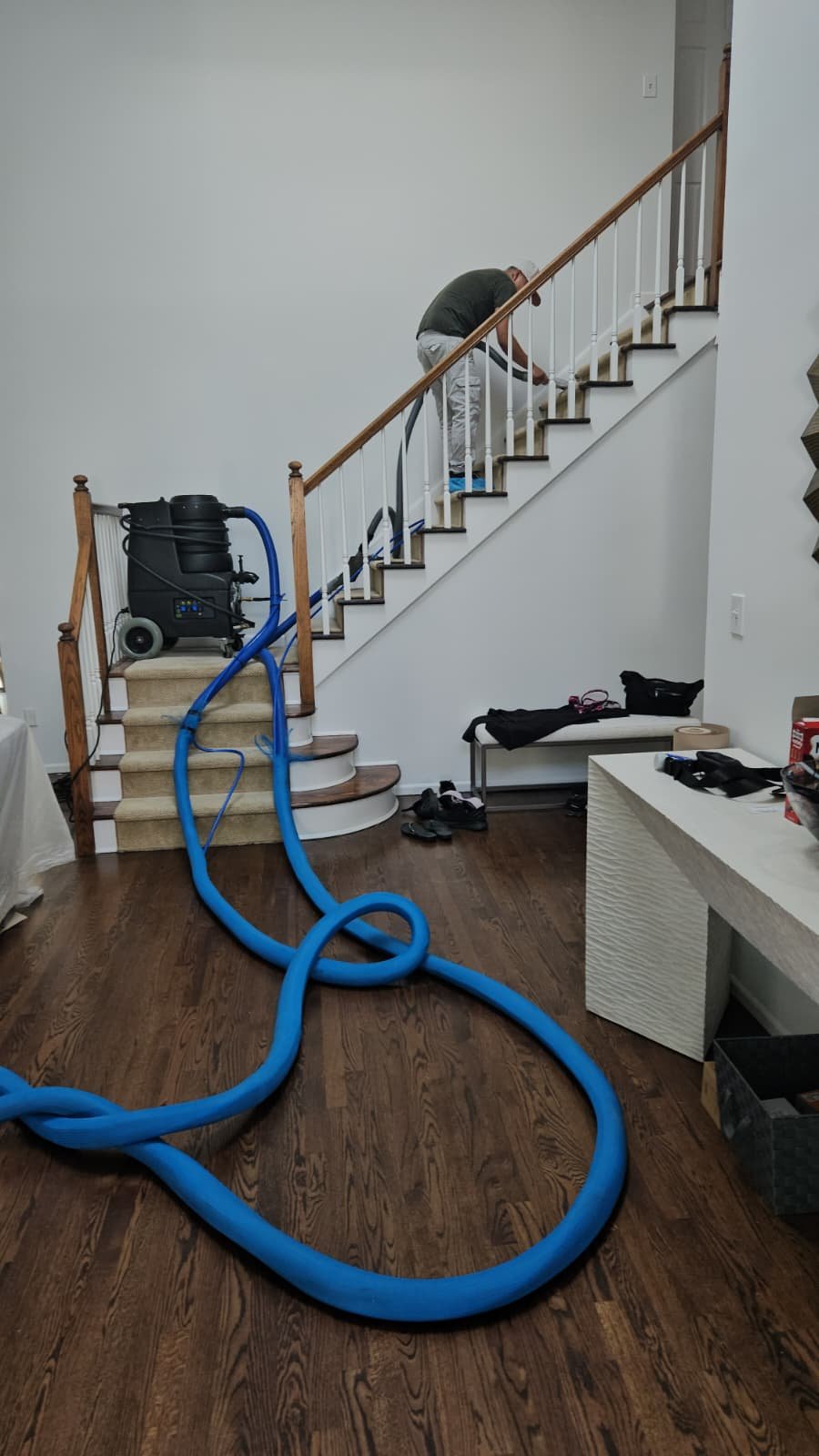
| Hose route | Inside the apartment, never through shared halls | Long runs up the stairwell, protected | Short runs, often from the street |
| Work hours | Set by the building, usually weekdays | Flexible, keep noise reasonable | Flexible |
| Who to call first | Management office, then front desk | Super or landlord, if needed | Nobody, just book |
| Best time to book | A week ahead, or earlier for weekends | A few days ahead | A few days ahead |
For walk-ups, the main challenge is the stairs, not the paperwork. For towers, it is the paperwork, not the stairs. Prewar co-ops on the Upper West Side or near Washington Heights can be a mix of both: an elevator, but a strict board.
6 mistakes that cancel cleanings in Manhattan buildings
None of these is hard to avoid. Most come from booking in a hurry. Ten minutes with the management office saves a wasted morning for everyone.
Your step-by-step plan before cleaning day
1 to 2 weeks before
Email the management office. Ask for vendor requirements, elevator rules and allowed work hours.
When you book
Book online or call, and send us the building’s requirements, the exact building name and the managing agent’s contact.
A few days before
Reserve the service elevator if needed. Confirm the paperwork arrived at the office.
The day before
Tell the front desk the vendor’s name and arrival time. Clear small items, cords and toys off the carpet.
Cleaning day
Point out stains and pet areas. Keep pets in a closed room or with a neighbor during the work.
After the cleaning
Keep windows cracked or the air on, stay off the wet carpet in socks, and put furniture back when it is dry.
How the cleaning day goes in a building
When everything is set up, a cleaning in a doorman building is calm and organized. Here is what happens:
- Check-in. The crew checks in at the front desk or service entrance and goes up the elevator the building assigns.
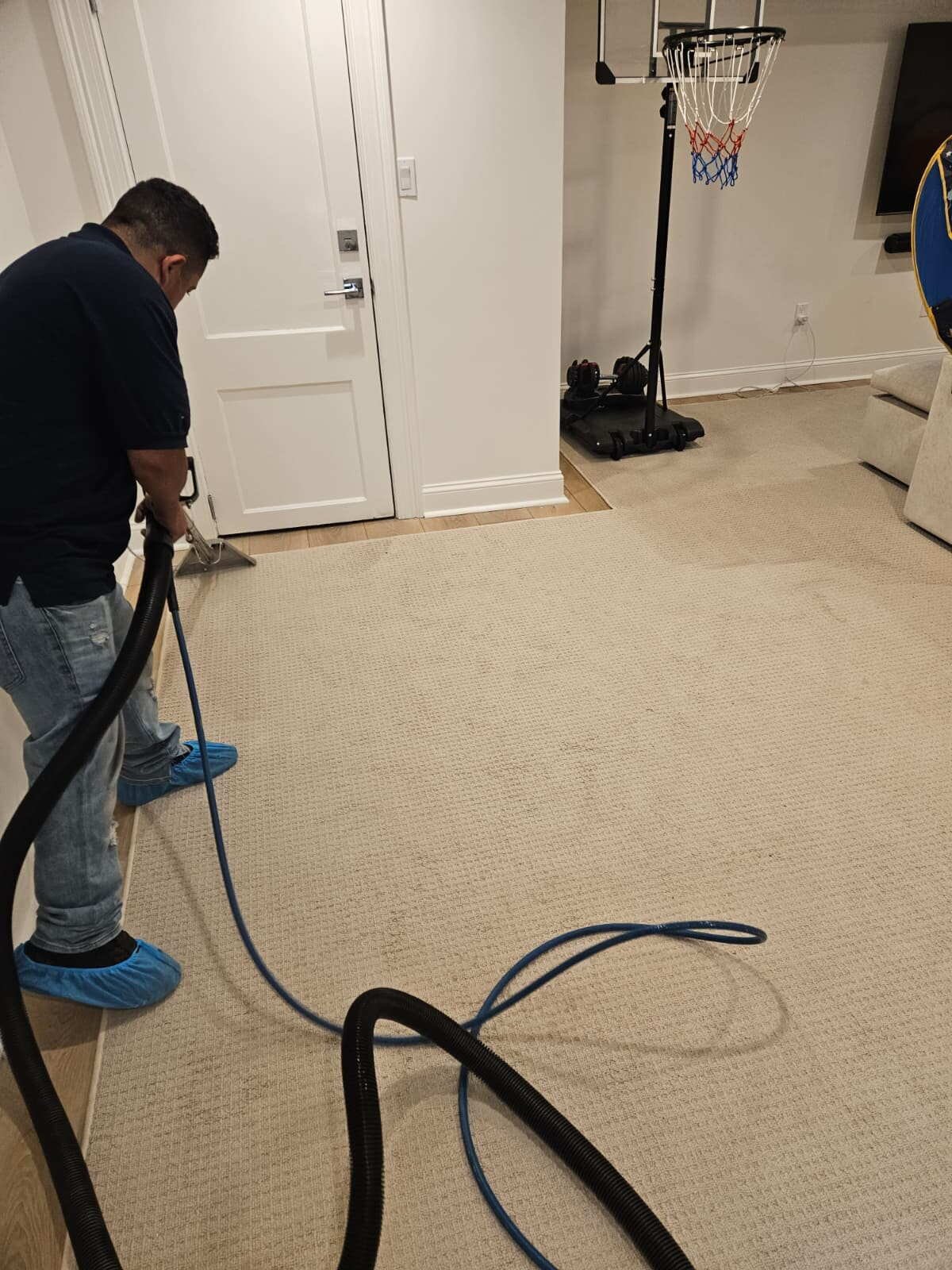
- Protect the path. Doorways and hallway floors near your door are protected, and equipment is set up inside your apartment, not in the shared hall.
- Walk-through. We look at each room with you, note stains, pet spots and wear, and confirm the price before we start.
- Vacuum and pre-treat. Dry soil comes out first. Traffic lanes and spots get the right pre-treatment for the type of stain.
- Hot water extraction. This is steam carpet cleaning: very hot water rinses the fibers and strong suction pulls the dirt and most of the water back out.
- Groom and dry. The pile is brushed in one direction so the carpet looks even, and airflow is set up so it dries quickly.
- Leave it clean. Equipment goes back down the same way it came up, and the hallway is left the way we found it.

Good to know: If you also want a sofa or a rug cleaned, say so when you book. It is much easier to add couch cleaning or area rug cleaning to the same visit than to go through the building process twice.
Drying time, noise and your neighbors
Neighbors in a co-op notice everything, so it helps to know what to expect. The cleaning machine makes a steady hum while the wand is working, a bit like a strong vacuum. It is loud in the room and much quieter through walls and floors. Most apartments are finished within the morning or afternoon, well inside normal work hours.
Drying is usually the easy part in Manhattan buildings. In winter, steam heat from the radiators dries rooms fast. In summer, air conditioning pulls moisture out of the air. Most rooms are dry in a few hours with the windows cracked or the air on. Heavy pet treatment or very thick carpet can take longer.
Two small courtesies keep everyone happy: a short note to the neighbor below if you share a thin floor, and keeping your door closed during the work so the hallway stays quiet. That is it.
Wondering about the weather? Our guide on winter salt stains on carpet in Manhattan explains why street salt tracked through the lobby is one of the most common things we clean in buildings from December to March.
Pets, kids and shared walls
Small apartments and tall buildings mean pets spend most of their lives on the same few rugs and carpets. If your dog or cat has had accidents, the smell can travel more than you think in a closed apartment, and the neighbors’ noses are only a wall away.
Tell us about pet areas when you book. Urine soaks below the surface, and a normal cleaning will not reach it. We use enzyme and odor treatments for those spots. Our guide on why pet urine smell comes back in Manhattan apartments explains why, and what really fixes it.
For families with small children, ask about the products we use and keep kids off the carpet until it is dry. If someone at home has allergies, regular vacuuming with a good filter between professional cleanings makes a real difference in a small, closed apartment.
What carpet cleaning costs in a Manhattan building
The building does not change our price. It is $55 per room, and new customers get 20% off their first cleaning. Here are simple examples:
| Apartment | Rooms with carpet | With 20% off first cleaning |
|---|---|---|
| Studio | 1 room – $55 | $44 |
| One bedroom | 2 rooms – $110 | $88 |
| Two bedroom | 3 rooms – $165 | $132 |
| Three bedroom | 4 rooms – $220 | $176 |
A sofa is $99, a mattress is $99, and rugs, sectionals and stairs get a free quote, with the price confirmed before we start. Moving in or out of the building? Our guide to move-out carpet cleaning and your security deposit covers the extra steps.
Buildings across Manhattan where our crews work
Our crews work in co-ops, condos, rental towers and walk-ups all over the island, from Midtown towers to prewar buildings uptown and lofts downtown. For anything else about carpet cleaning in Manhattan, NY, see our neighborhood pages:
Not sure if we cover your street? See all our Manhattan service areas, or read the answers to common questions on our FAQ page.
Live in a doorman building or co-op? Book now and send us your building’s vendor rules. We will plan the rest.
Co-op and doorman building questions
Does my building need paperwork from the carpet cleaner?
Many co-ops, condos and managed rental buildings ask every vendor for a certificate of insurance before the visit. Ask your management office for their requirements and send them to us when you book.
How far ahead should I book in a doorman building?
About a week ahead is ideal. That leaves time for the building paperwork and the service elevator reservation. If the building already has our paperwork on file, same-day or next-day may be possible.
Do I need to reserve the service elevator?
It depends on the building. Some want every vendor with equipment on the service elevator and require a reservation, others let the porter run it. Ask the front desk or the super.
Will the cleaning disturb my neighbors?
The machine hums like a strong vacuum while the wand is working. It is loud in the room but much quieter through walls, and the work is done inside your building’s normal work hours.
How long until I can walk on the carpet?
Most rooms are dry in a few hours with good airflow. Radiator heat in winter and air conditioning in summer both help. Heavy pet treatment can take longer.
How much does carpet cleaning cost in a Manhattan co-op?
The same as anywhere in Manhattan: $55 per room, with 20% off your first cleaning. Sofas and mattresses are $99 each, and rugs get a free quote with the price confirmed before we start.
Get a free quote for your building
Tell us your address, building type and the rooms you want cleaned. We will call you back with a price and the first available time.
Prefer to talk? Call (347) 594-1088.
Related reading
- Upper East Side carpet and rug care: an apartment guide
- Steam carpet cleaning vs. renting a machine in Manhattan
- How much does carpet cleaning cost in Manhattan?
- How to choose the best carpet cleaning service in Manhattan
- Mattress cleaning in Manhattan: dust mites and allergies
- Why do my carpets still look dirty after cleaning?
- How often should Manhattan residents clean their carpets?
- How to maintain wall-to-wall carpets in Manhattan’s high-traffic areas
Clean carpets, no trouble with the building
$55 per room · 20% off your first cleaning · Same-day service across Manhattan
